
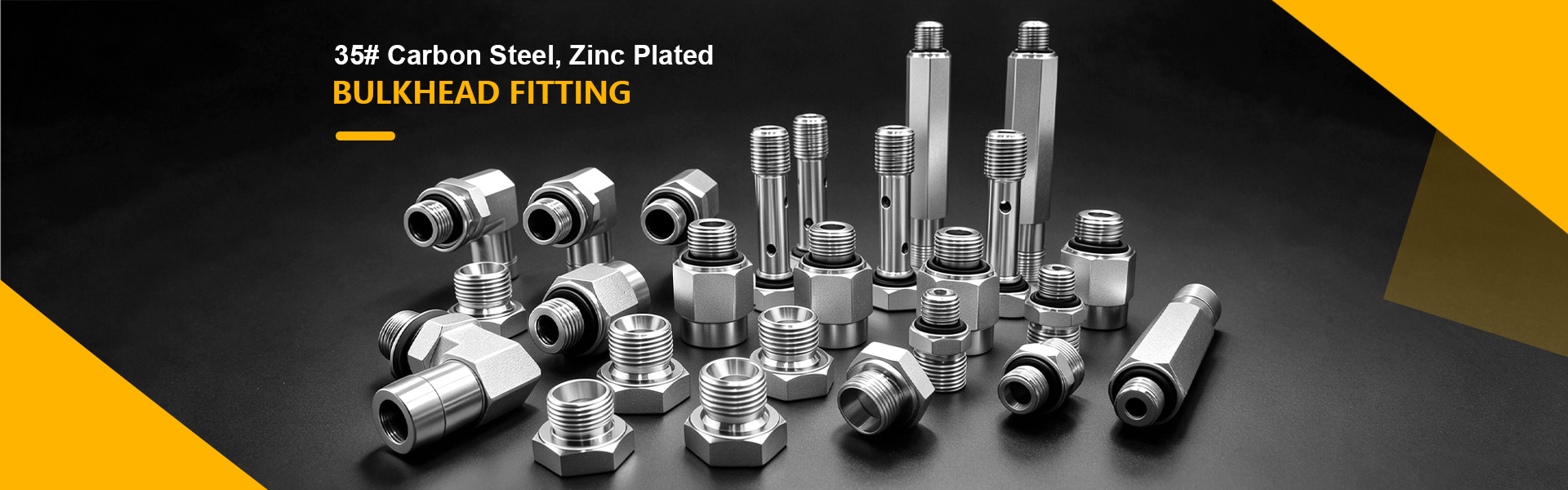
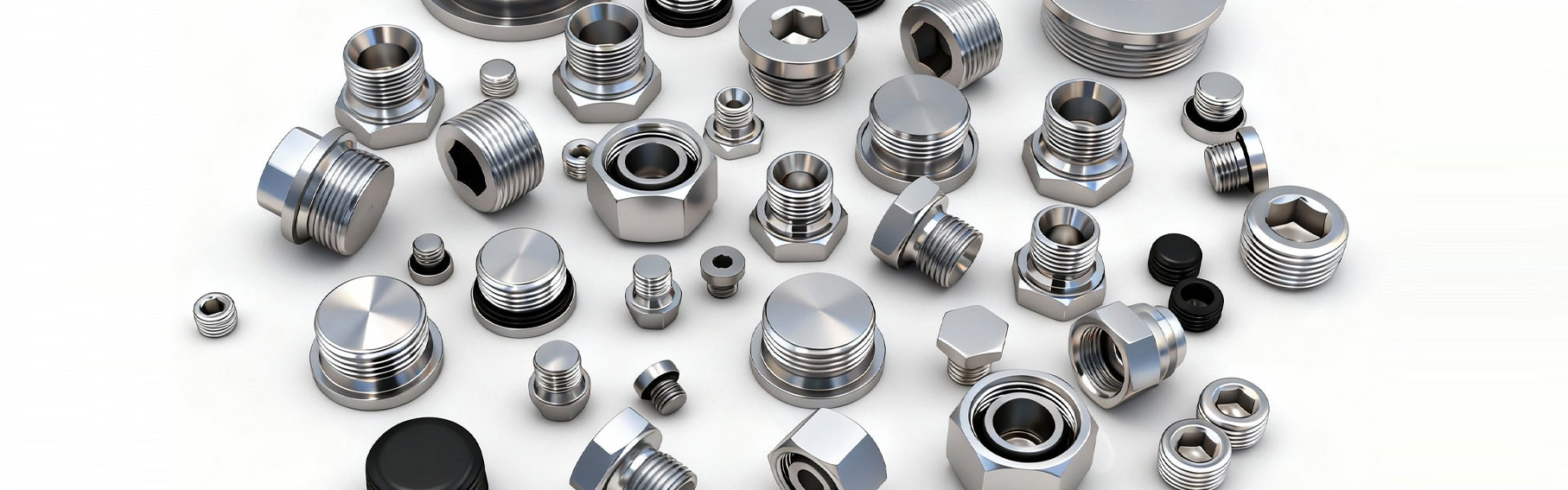
In industrial pipeline and equipment oil circuit sealing applications, the selection of plug material directly affects service life, safety, stability, and cost control. As a factory specializing in plug production, we often receive inquiries from customers: "What material should I use for normal working conditions?" "Should I choose 304 or 316 for corrosive environments?" Today, taking our core materials—35# carbon steel, 304 stainless steel, and 316 stainless steel—as examples, we will guide you through the scientific selection method.
1. Analysis of "Characteristics + Applications" for the Three Core Materials
1. 35# Carbon Steel Plug: The "Cost-Effective Choice" for Normal Working Conditions
Core Characteristics: Carbon content of approximately 0.35%, tensile strength of over 530MPa, excellent machinability. Rust resistance can be enhanced through surface treatments such as galvanizing, zinc-nickel alloy plating, and blackening. However, the bare material is prone to oxidation and rust in humid environments, with weak corrosion resistance.
• Suitable Applications: Ideal for non-corrosive, low-humidity industrial scenarios, such as:
• Sealing of oil and air circuits in machine tools
• End sealing of ordinary pipelines in dry indoor environments
• Temporary pipeline sealing or low-cost bulk projects
• Customer Case: A machinery manufacturer purchased 35# carbon steel plugs for its machine tool hydraulic systems. After galvanizing treatment, the plugs achieved a service life of over 3 years in a dry workshop environment, at only 1/3 the cost of stainless steel plugs.
2. 304 Stainless Steel Plug: The "Basic Protection Option" for General Corrosive Environments
• Core Characteristics: Contains 18% chromium and 8% nickel, offering good acid and alkali resistance, and moisture resistance. It can resist corrosion from rainwater and weakly acidic media (e.g., aqueous solutions with pH 5-9) at room temperature. It has a high surface finish and requires no additional rust-proof treatment.
• Suitable Applications: For mildly corrosive or high-cleanliness scenarios, such as:
• Food processing equipment pipelines (meets food-grade contact standards)
• Civil building water supply and drainage pipelines
• Outdoor electrical equipment sealing without strong corrosion
• Note: Avoid using in high-salt marine environments or strong acidic media (e.g., sulfuric acid, hydrochloric acid), as pitting corrosion may occur.
3. 316 Stainless Steel Plug: The "Durable Guarantee" for Harsh Corrosive Environments
• Core Characteristics: Added with 2%-3% molybdenum based on 304, significantly improving corrosion resistance. It can withstand high salt spray, strong acids and alkalis (e.g., media with pH 2-12), and chloride environments, with superior high-temperature resistance (can work long-term below 800℃).
• Suitable Applications: For highly corrosive and demanding scenarios, such as:
• Acid and alkali solution transmission pipelines in chemical plants
• Offshore engineering and marine equipment pipelines
• Medical disinfection equipment (resists corrosion from high-temperature disinfectants)
• Customer Feedback: After replacing the original 304 plugs with 316 stainless steel plugs, a coastal chemical plant reduced the plug corrosion damage rate from 5% per month to 0.1%, cutting annual maintenance costs by 60%.

